Josephus does not tell us that Christianity is true, and Christians do not need Josephus to tell them that Christ is risen. But Christianity makes claims about things that happened in public history under identifiable rulers, priests, and governors. For that reason, testimony from outside the church matters.
09/16/26
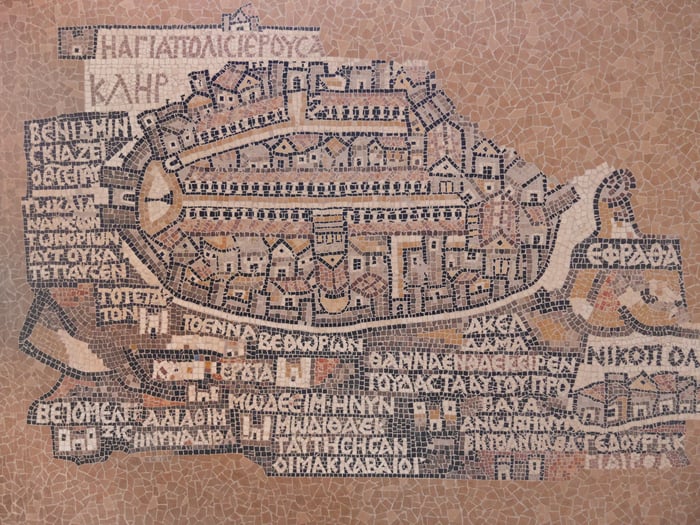
The student of Scripture should always have a map open next to their Bible as they read. If possible, they should also travel to Israel, not to make a pilgrimage, but to see the context of the land in which these stories took place. These are not fairy tales made up about fictional fantasy lands; these are stories about real people in real places interacting with a real God.

09/09/26
The word of assurance given to Moses at Sinai echoes through eternity on the lips of the Savior, untroubling troubled souls with the good news that there is one who walks the paths of life with you, and soon he’s coming to bring you to himself.
All Articles
Author
- All Authors
- 1517 Guest Contributor
- 1517 Publishing
- 1517 Staff
- A. A. Just Jr.
- A.J. Vega
- Aaron Boerst
- Adam Francisco
- Adam Stetson
- Amy Mantravadi
- Andrew Foss
- Anthony DiLiberto
- Blake Flattley
- Bob Hiller
- Bob Sundquist
- Bonnie Petroschuk
- Brad Soenksen
- Bradley Gray
- Brandon Hanson
- Brandon Pangman
- Brennan Manning
- Brian W. Thomas
- Bror Erickson
- Bruce Hillman
- C.S. Lewis
- Caleb Keith
- Chad Bird
- Charles E. Fry
- Christopher J. Richmann
- Cindy Koch
- CJ Armstrong
- Craig Donofrio
- Dan Chrismer
- Dan Weber
- Daniel Deen
- Daniel Emery Price
- Daniel Stenberg
- Daniel van Voorhis
- David Clay
- David Rufner
- David Schmitt
- Debi Winrich
- Delwyn Campbell
- Dominick Santore
- Donavon Riley
- Edward Killian
- Elyse Fitzpatrick
- Erick Sorensen
- Gage Jordan
- Gerhard Forde
- Grant Klembara
- Greg Koukl
- Gretchen Ronnevik
- Haroldo Camacho
- Heather Schulz
- Hermann Sasse
- Jacob Corzine
- Jacob Smith
- Jake Allstaedt
- Jared C. Wilson
- Jason Lane
- Jason Lang
- Jason Oakland
- Jay Sawrie
- Jeff Mallinson
- Jeffrey Pulse
- Jenifer Mohan
- Jeremiah Schultz
- Jessica Delgado
- Jessica Thompson
- Jim Nestingen
- Joel Fitzpatrick
- Joel Hess
- Joey Goodall
- John Bombaro
- John Bortulin
- John Chrysostom
- John T. Pless
- John W. Hoyum
- John Warwick Montgomery
- Jonathan Ruehs
- Jordan Spina
- Joshua Miller
- Justin Rossow
- Karen Stenberg
- Kathy Morales
- Katie Koplin
- Kelsi Klembara
- Ken Sundet Jones
- Kerri Tom
- Kevin Hale
- Kevin McClain
- Kyle G. Jones
- Larry D. Hughes
- Laura Bauer
- Luke Kjolhaug
- Magnus Persson
- Mariah Coward
- Mark Duerr
- Mark Jasa
- Mark Mattes
- Mark Pierson
- Martin Luther
- Matt Johnson
- Matt Kroelinger
- Matt Popovits
- Matthew L. Rubinstein
- Maxx Fisher
- Michael Berg
- Michael Gibney
- Nicholas Hopman
- Nicholas Kallis
- Norman Nagel
- Paul Dunk
- Paul Koch
- Pete Lange
- Peter Nafzger
- Philip Bartelt
- Raleigh Sadler
- Rick Ritchie
- RJ Grunewald
- Robert Farrar Capon
- Robert Kolb
- Rod Rosenbladt
- Roland Ehlke
- Ron Hodel
- Russ Lackey
- Ryan Couch
- Ryan Matthias
- Ryan Stevenson-Cosgrove
- Ryan Tinetti
- Sam Leanza Ortiz
- Sam P. Schuldheisz
- Sarah Crowder
- Scott Davis
- Scott Keith
- Scott Landrum
- Seth Moorman
- Steve Byrnes
- Steve Kruschel
- Steven A. Hein
- Steven Paulson
- StoryMakers NYC
- Tanner Olson
- Tate Barber
- Ted Rosenbladt
- Travis Scholl
- Tyler Cronkright
- Uwe Siemon-Netto
- Valerie Thur
- Wade Johnston
- Walter Hwang
- Wayne Sender
- Zack James Cole

06/26/22
Despite the very real obstacles and difficulties, this entire scene is marked by God’s gracious work.
%20(1).jpg?width=36&height=36&name=untitled%20(16%20of%2039)%20(1).jpg)
06/20/22
According to the Law, everyone will be judged by their own deeds, on his own work. So, before the judgment of God we only have our own works to boast in and not our neighbor’s. But the Gospel shows us a wonderful exception.

06/19/22
Nuance and subtlety have been replaced with scorched-earth contempt. It is us versus them. Compromise is not an option. Jesus, however, would have none of it.

06/19/22
In our text for today, here is the great prophet, Elijah, the same guy who God used in miraculous ways, hiding in a cave, scared to death.

06/19/22
The question is, how are you going to live out your life as someone who has taken up the Robe of Freedom?
06/12/22
The LORD God is seeking after those who have not sought Him! He calls out to those who have not been called by His name.
06/12/22
Jesus comes to people and changes everything. “Before” is long gone. “After” is a whole new world.
06/12/22
Paul wants us to know the radical identity shift that takes place when you put on Christ. You are free.

06/10/22
The Trinity is a handy shorthand for all that God has done to justify sinners.

06/07/22
Our God is the one who brings back the exile, who restores the outcast, he is the one who devises means to do so.
06/06/22
Our only hope in life and death is that God loves sinners, who fail and forget constantly, with a love that is just as constant.

06/06/22
After the big, splashy, exciting day of Pentecost in Acts 2, church life faded into the ordinary life of ragtag sinners encountering the God of the cross coming to them in seemingly unawesome ways. What can we learn from this?
1517 is a Christian non-profit (501(c)3) multi-media organization. Our mission is to declare and defend the Good News that we are forgiven and free on account of the death and resurrection of Jesus alone.





1517 grants permission for our free online resources to be printed, photocopied, and otherwise used freely for private and church use. We require that authorship and source (1517.org) are referenced and maintained. These resources may not be sold or included in any publications for sale.