In Jesus, God acted first, even when we were dead in our trespasses and sins (Eph. 2:5).


10/13/26
Yahweh who is pierced and mourned in prophecy is Jesus who is pierced and mourned in fulfillment.

10/09/26
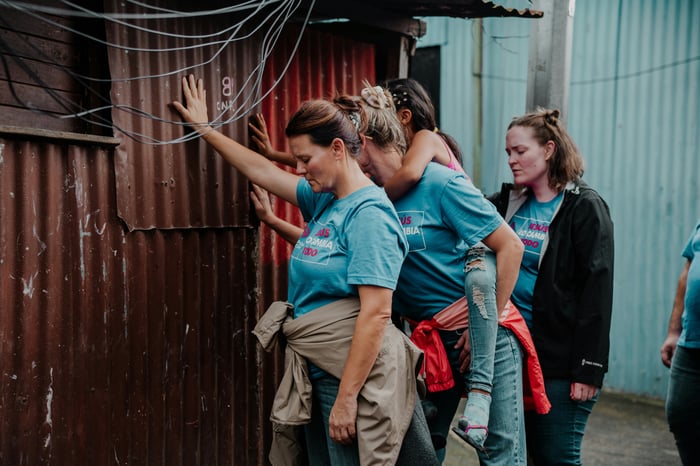
There is indeed a responsibility for the church to share the gospel in the world, but never at the expense of the church’s charity and mercy for those neighbors who are nearby.
All Articles
Author
- All Authors
- 1517 Guest Contributor
- 1517 Publishing
- 1517 Staff
- A. A. Just Jr.
- A.J. Vega
- Aaron Boerst
- Adam Francisco
- Adam Stetson
- Amy Mantravadi
- Andrew Foss
- Anthony DiLiberto
- Blake Flattley
- Bob Hiller
- Bob Sundquist
- Bonnie Petroschuk
- Brad Soenksen
- Bradley Gray
- Brandon Hanson
- Brandon Pangman
- Brennan Manning
- Brian W. Thomas
- Bror Erickson
- Bruce Hillman
- C.S. Lewis
- Caleb Keith
- Chad Bird
- Charles E. Fry
- Christopher J. Richmann
- Cindy Koch
- CJ Armstrong
- Craig Donofrio
- Dan Chrismer
- Dan Weber
- Daniel Deen
- Daniel Emery Price
- Daniel Stenberg
- Daniel van Voorhis
- David Clay
- David Rufner
- David Schmitt
- Debi Winrich
- Delwyn Campbell
- Dominick Santore
- Donavon Riley
- Edward Killian
- Elyse Fitzpatrick
- Erick Sorensen
- Gage Jordan
- Gerhard Forde
- Grant Klembara
- Greg Koukl
- Gretchen Ronnevik
- Haroldo Camacho
- Heather Schulz
- Hermann Sasse
- Jacob Corzine
- Jacob Smith
- Jake Allstaedt
- Jared C. Wilson
- Jason Lane
- Jason Lang
- Jason Oakland
- Jay Sawrie
- Jeff Mallinson
- Jeffrey Pulse
- Jenifer Mohan
- Jeremiah Schultz
- Jessica Delgado
- Jessica Thompson
- Jim Nestingen
- Joel Fitzpatrick
- Joel Hess
- Joey Goodall
- John Bombaro
- John Bortulin
- John Chrysostom
- John T. Pless
- John W. Hoyum
- John Warwick Montgomery
- Jonathan Ruehs
- Jordan Spina
- Joshua Miller
- Justin Rossow
- Karen Stenberg
- Kathy Morales
- Katie Koplin
- Kelsi Klembara
- Ken Sundet Jones
- Kerri Tom
- Kevin Hale
- Kevin McClain
- Kyle G. Jones
- Larry D. Hughes
- Laura Bauer
- Luke Kjolhaug
- Magnus Persson
- Mariah Coward
- Mark Duerr
- Mark Jasa
- Mark Mattes
- Mark Pierson
- Martin Luther
- Matt Johnson
- Matt Kroelinger
- Matt Popovits
- Matthew L. Rubinstein
- Maxx Fisher
- Michael Berg
- Michael Gibney
- Nicholas Hopman
- Nicholas Kallis
- Norman Nagel
- Paul Dunk
- Paul Koch
- Pete Lange
- Peter Nafzger
- Philip Bartelt
- Raleigh Sadler
- Rick Ritchie
- RJ Grunewald
- Robert Farrar Capon
- Robert Kolb
- Rod Rosenbladt
- Roland Ehlke
- Ron Hodel
- Russ Lackey
- Ryan Couch
- Ryan Matthias
- Ryan Stevenson-Cosgrove
- Ryan Tinetti
- Sam Leanza Ortiz
- Sam P. Schuldheisz
- Sarah Crowder
- Scott Davis
- Scott Keith
- Scott Landrum
- Seth Moorman
- Steve Byrnes
- Steve Kruschel
- Steven A. Hein
- Steven Paulson
- StoryMakers NYC
- Tanner Olson
- Tate Barber
- Ted Rosenbladt
- Travis Scholl
- Tyler Cronkright
- Uwe Siemon-Netto
- Valerie Thur
- Wade Johnston
- Walter Hwang
- Wayne Sender
- Zack James Cole

01/31/23
Even as he was dying, the heart of God poured itself out for the sake of sinners.

01/27/23
I think the problem with the idea of eternity is that we do not have any direct experience of it, but we encounter enough of its possibility to be unsettling.

01/06/23
The usual acclamation when one becomes King is: “Long live the King!” But this King of kings, this son of David, has come to die.
01/05/23
As the writer to the Hebrews affirms, what makes the Christian gospel so much better is that we are no longer dealing with “types and shadows."
.webp?width=36&height=36&name=1517headshots-141-Edit%20(1).webp)
12/20/22
Who would ever want all these screamers and haters? It turns out that Christ does.
12/15/22
If Jesus shows up and you are a sinner, ‘tis more blessed to receive than to give

11/28/22
For with God we look not for the order of nature, but rest our faith in the power of him who works.
%20(1).jpg?width=36&height=36&name=untitled%20(16%20of%2039)%20(1).jpg)
11/12/22
The epistle text from Colossians 1 declares how the great drama of redemption and human history ends.

11/03/22
We don’t start with behavior and work toward Christ. We start with Christ and everything works out from there.

10/30/22
The name of God invites us on a journey to see how God will remain present with his people, listen to their cries for salvation, know their sufferings in such an intimate way so as to incarnate them in Christ.

10/30/22
The words of Jesus shine with a graceful brilliance among the broken fragments of this world.

10/28/22
Through water, blood, and word, the Spirit never stops pointing us to Christ, and even more, giving us Christ.
1517 is a Christian non-profit (501(c)3) multi-media organization. Our mission is to declare and defend the Good News that we are forgiven and free on account of the death and resurrection of Jesus alone.





1517 grants permission for our free online resources to be printed, photocopied, and otherwise used freely for private and church use. We require that authorship and source (1517.org) are referenced and maintained. These resources may not be sold or included in any publications for sale.