Today, the longing for cultural Christianity on both the left and the right hearkens back to an older version of Christendom that was a mixed blessing for the church in the western world. The cultural mediation of Christian views on created order has certainly benefitted the civilization we’ve inherited. But the gospel itself isn’t something that can be reduced to cultural mediation either. Instead, the gospel as a message stands apart from all human accomplishments and achievements, no matter how beneficial they might be.


09/15/26
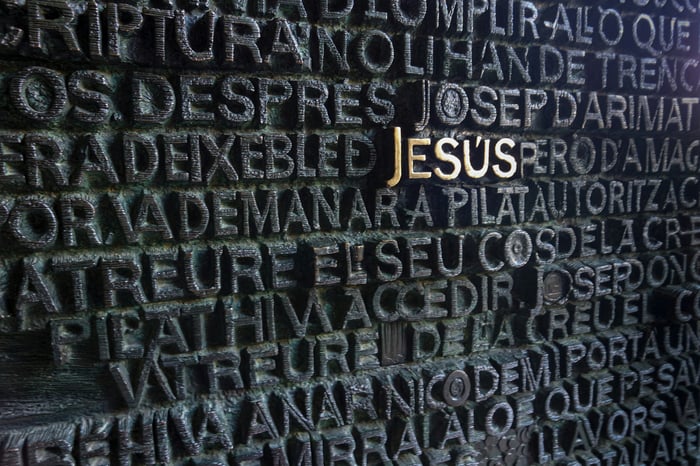
Josephus does not tell us that Christianity is true, and Christians do not need Josephus to tell them that Christ is risen. But Christianity makes claims about things that happened in public history under identifiable rulers, priests, and governors. For that reason, testimony from outside the church matters.
09/16/26
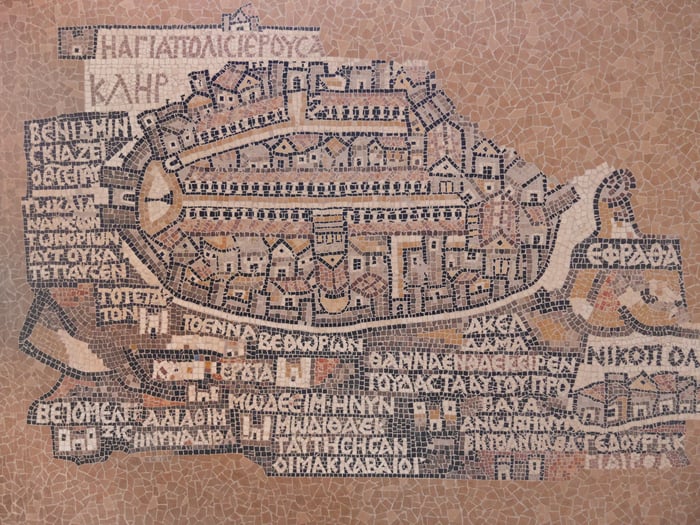
The student of Scripture should always have a map open next to their Bible as they read. If possible, they should also travel to Israel, not to make a pilgrimage, but to see the context of the land in which these stories took place. These are not fairy tales made up about fictional fantasy lands; these are stories about real people in real places interacting with a real God.
All Articles
Author
- All Authors
- 1517 Guest Contributor
- 1517 Publishing
- 1517 Staff
- A. A. Just Jr.
- A.J. Vega
- Aaron Boerst
- Adam Francisco
- Adam Stetson
- Amy Mantravadi
- Andrew Foss
- Anthony DiLiberto
- Blake Flattley
- Bob Hiller
- Bob Sundquist
- Bonnie Petroschuk
- Brad Soenksen
- Bradley Gray
- Brandon Hanson
- Brandon Pangman
- Brennan Manning
- Brian W. Thomas
- Bror Erickson
- Bruce Hillman
- C.S. Lewis
- Caleb Keith
- Chad Bird
- Charles E. Fry
- Christopher J. Richmann
- Cindy Koch
- CJ Armstrong
- Craig Donofrio
- Dan Chrismer
- Dan Weber
- Daniel Deen
- Daniel Emery Price
- Daniel Stenberg
- Daniel van Voorhis
- David Clay
- David Rufner
- David Schmitt
- Debi Winrich
- Delwyn Campbell
- Dominick Santore
- Donavon Riley
- Edward Killian
- Elyse Fitzpatrick
- Erick Sorensen
- Gage Jordan
- Gerhard Forde
- Grant Klembara
- Greg Koukl
- Gretchen Ronnevik
- Haroldo Camacho
- Heather Schulz
- Hermann Sasse
- Jacob Corzine
- Jacob Smith
- Jake Allstaedt
- Jared C. Wilson
- Jason Lane
- Jason Lang
- Jason Oakland
- Jay Sawrie
- Jeff Mallinson
- Jeffrey Pulse
- Jenifer Mohan
- Jeremiah Schultz
- Jessica Delgado
- Jessica Thompson
- Jim Nestingen
- Joel Fitzpatrick
- Joel Hess
- Joey Goodall
- John Bombaro
- John Bortulin
- John Chrysostom
- John T. Pless
- John W. Hoyum
- John Warwick Montgomery
- Jonathan Ruehs
- Jordan Spina
- Joshua Miller
- Justin Rossow
- Karen Stenberg
- Kathy Morales
- Katie Koplin
- Kelsi Klembara
- Ken Sundet Jones
- Kerri Tom
- Kevin Hale
- Kevin McClain
- Kyle G. Jones
- Larry D. Hughes
- Laura Bauer
- Luke Kjolhaug
- Magnus Persson
- Mariah Coward
- Mark Duerr
- Mark Jasa
- Mark Mattes
- Mark Pierson
- Martin Luther
- Matt Johnson
- Matt Kroelinger
- Matt Popovits
- Matthew L. Rubinstein
- Maxx Fisher
- Michael Berg
- Michael Gibney
- Nicholas Hopman
- Nicholas Kallis
- Norman Nagel
- Paul Dunk
- Paul Koch
- Pete Lange
- Peter Nafzger
- Philip Bartelt
- Raleigh Sadler
- Rick Ritchie
- RJ Grunewald
- Robert Farrar Capon
- Robert Kolb
- Rod Rosenbladt
- Roland Ehlke
- Ron Hodel
- Russ Lackey
- Ryan Couch
- Ryan Matthias
- Ryan Stevenson-Cosgrove
- Ryan Tinetti
- Sam Leanza Ortiz
- Sam P. Schuldheisz
- Sarah Crowder
- Scott Davis
- Scott Keith
- Scott Landrum
- Seth Moorman
- Steve Byrnes
- Steve Kruschel
- Steven A. Hein
- Steven Paulson
- StoryMakers NYC
- Tanner Olson
- Tate Barber
- Ted Rosenbladt
- Travis Scholl
- Tyler Cronkright
- Uwe Siemon-Netto
- Valerie Thur
- Wade Johnston
- Walter Hwang
- Wayne Sender
- Zack James Cole

06/10/13
She against whom I preached, in her unexpected response actually “preached” to me three truths I have never forgotten.
06/07/13
What kind of fool does what David did? What kind of fool ignores the riches spilling out of his pockets to steal the only penny a poor man has?
05/21/13
For since it was not enough that the Lord of heaven and earth hung on your every word, his Word was made flesh and prayed among us, a priest in the order of Melchizedek, “offering up prayers and supplications with loud cries and tears, to him who was able to save Him from death,” (Heb 5:7).
05/13/13
The second truth, however, is that just because God has become a man does not mean he thinks, desires, or speaks as man generally does.
05/10/13
We need not look the part to elicit divine compassion. We need not be on our knees, face downcast, eyes watery, voice quivering, to make sure we get heaven’s attention. We need not play the beggar before God.
04/11/13
Let him feel the heft of stone cradled in his palm, and consider the gravity of guilt cast upon the hypocrite.
02/14/13
When Jesus was baptized, his Father’s voice fell from heaven, proclaiming, “You are my beloved Son, whom I love; with you I am well pleased,” (Mk 1:11). But there in the wilderness it did not seem so, did it?
01/23/13
If I am so bound up in the history of the first man, all the way back at the dawn of creation, how can I not also be bound up in the more recent history of my family?
01/12/13
Never are we more Hollywood than when we admit wrongdoing. Our confession is scripted, edited, practiced. Move over Brad Pitt; I’ve got this role down pat, for it’s my version of me.
12/30/12
A few weeks ago, the pastor of my congregation did something in his sermon I’ve never heard a pastor do: he confessed a failure. He had once been ashamed of his brother, he admitted, and had acted in a way toward him that was not in keeping with love.
12/13/12
Perhaps part of the mistake we’ve made is in forgetting that the first Christmas, the actual birthday of Jesus, started out as the worst of times.
11/28/12
I didn’t pray for forgiveness, the Holy Spirit, or world peace. All this ten-year-old wanted was a badger. So that’s what I asked for.
1517 is a Christian non-profit (501(c)3) multi-media organization. Our mission is to declare and defend the Good News that we are forgiven and free on account of the death and resurrection of Jesus alone.





1517 grants permission for our free online resources to be printed, photocopied, and otherwise used freely for private and church use. We require that authorship and source (1517.org) are referenced and maintained. These resources may not be sold or included in any publications for sale.